mperialism activates the money-creation machine to cope with the crises that emerge from the collapse of capitalism.
Daniel Campos – The Marx International
The announcements made by US Federal Reserve Chairman Jerome Powell and the Federal Open Market Committee (FOMC) on September 18, 2025, signaled the start of a new round of financial bailouts and rescues of the global capitalist economy. This round is the fifth that the central banks of imperialist countries have carried out since 2008, hence the name QE5, which comes from the number 5 after the term “Quantitative Easing “ (QE), meaning the easing of rules for creating money. Following those announcements on September 18, Powell and the FOMC implemented three interest rate cuts, from a range of 5% to 3.5%, the level required to create cheap money and thus carry out the bailouts.
Trump is pressuring the Fed to act quickly, calling Powell “a fool ,” and the FOMC’s decisions have triggered a political crisis within the Fed, which is divided on how to address the crisis for the first time in decades. You might wonder: Are the world’s most important central banks going to create money to solve global poverty? Not at all. Financial bailouts and rescues are massive amounts of money that will end up in the pockets of the 1% oligarchy that dominates the global economy—millionaires who live in mansions with fleets of cars, own private islands, and travel in expensive jets. Financial bailouts and rescues are an irrational immorality because they involve squandering enormous amounts of wealth in the bottomless pit of global corporations.
The Fed is, in effect, the world’s central bank, because it prints the dollar, the global currency of capitalism. Therefore, the decisions made by its chairman, Powell, directly impact the outlook and future of capitalism. Why does Trump call Powell stupid? Is it because he’s in a “hurry” to lower interest rates? Why does his pressure trigger crises at the Fed? The answer to these questions is that QE5 will face a completely different crisis scenario than previous bailouts.
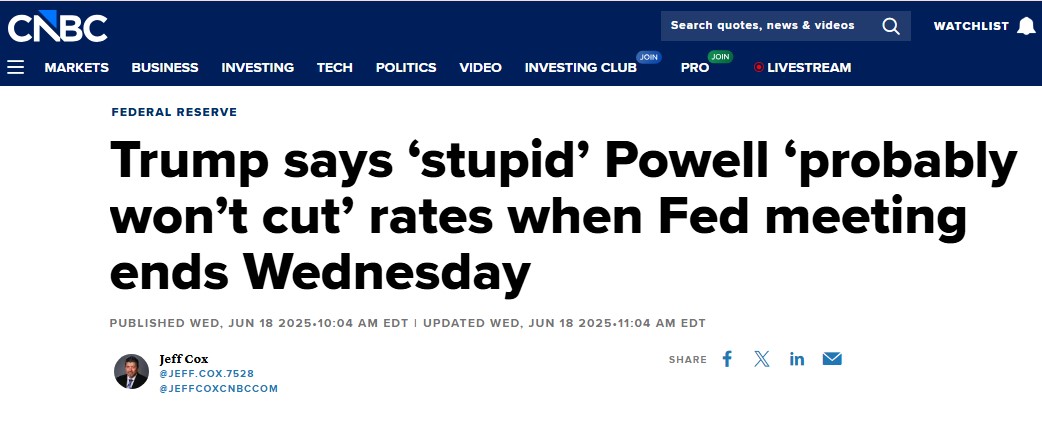
In the image, financial commentator Jeff Cox reports on Trump’s insults to Powell.
The crisis of capitalism is of historical, civilizational, and epochal magnitude, and its main expression is the bailouts and rescue packages. These operations, called QE1 in 2008, QE2 in 2010, QE3 in 2012, and QE4 in 2019, addressed a capitalist landscape in the throes of a severe crisis, but compared to the current situation, they seem like a joke. QE5 will have to confront an unprecedented worsening of the global capitalist crisis, which we can define as a true “perfect storm.” That explains Trump’s “haste,” the clashes with Powell, and the open crisis at the Fed.
These are all reactions born of the desperation of the ruling classes, who are perfectly aware of the disaster they have caused, the impending catastrophe they are hiding from the people. In this article, we Marxists will explain in detail what the “perfect storm” of global capitalism that is coming consists of. And at the end of the article, we will explain the impact that the global class struggle has on the capitalist economy, and how that impact is already clearly manifested in the rising prices of gold and precious metals.
QE5 in the face of capitalism’s “perfect storm”
What challenges does QE5 face? Since 2020, capitalism has been experiencing a consistent collapse due to several critical factors, including global recession, supply chain disruptions or global bottlenecks, the collapse of trade, the destruction of productive forces, widespread precarity, poverty, environmental devastation, climate change, bubbles, speculative maneuvers, crashes, bankruptcies, pandemics, wars, and so on. What’s new is that this collapse has given rise to six major crises simultaneously, some of which had been brewing for some time, constituting a “perfect storm” for capitalism.
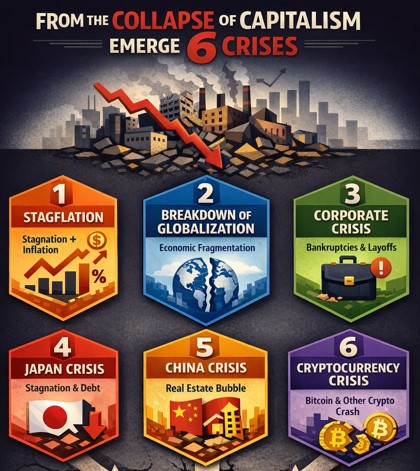
Each of these six crises threatens to burst the “bubble of everything” —that is, the complex of speculative bubbles plaguing global capitalism, such as the ETF and financial services bubbles, the China bubble, the Artificial Intelligence (AI) bubble, the world’s real estate bubbles, and so on. Bubbles are a term from bourgeois economics that refers to the masses of over-accumulated capital invested in an asset, commodity, or product, seeking extraordinary profits. When that commodity or asset fails to achieve the expected returns, the bubble bursts, leaving behind a desolate landscape of mass bankruptcies, layoffs, and closures, leaving that sector of the economy in a state resembling a barren wasteland.
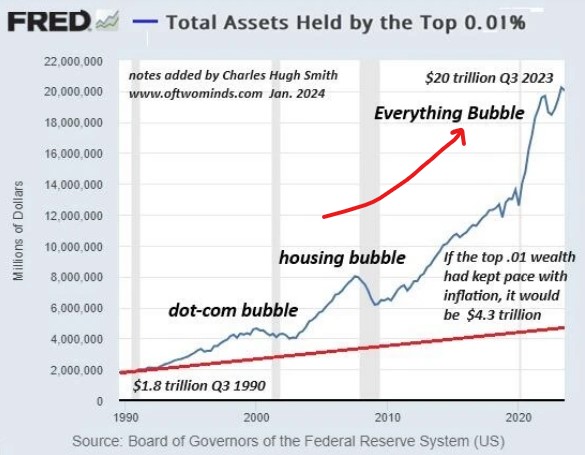
The image shows the ” everything bubble,” which had already surpassed $20 trillion in 2023, far exceeding both the dot-com bubble and the subprime mortgage bubble. Source: Federal Reserve Board of Governors
We will analyze the six crises separately, but it is necessary to clarify that these crises are developing simultaneously; that is, they are mutually reinforcing. The separate analysis is purely for pedagogical purposes, to aid understanding, but the elements of analysis can only be fully grasped if they are understood as simultaneous crises that interrelate unevenly and in combination within the broader context of the global capitalist economy.
1) The development of global stagflation
To confront the collapse, central banks injected approximately $30 trillion in 2019, 2020, and 2021 in the largest bailout operation in history to date: QE4. But by injecting in just three years the same amount of money as in the previous twelve, this brutal creation of money out of thin air led to the explosion of global inflation in 2021, as you can read by clicking here. Fearing runaway inflation and in an attempt to prevent further global price increases, the leaders of global imperialism halted the bailouts and withdrew money from circulation in an operation called “Quantitative Tightening” (QT). This was the second QT, as the first had been implemented between 2015 and 2019.
QT failed to curb the inflation that had become structurally entrenched in capitalism. But the implementation of QT’s monetary tightening unleashed widespread bankruptcy: In the second half of March 2023, global imperialism faltered as a wave of bankruptcies erupted in the United States, beginning with Silicon Valley Bank, followed by First Republic Bank, Signature Bank, and 186 other banks declaring themselves in danger. In Europe, Credit Suisse, one of the ten global corporations that dominate the world economy, collapsed. In other words, in seeking to curb inflation, the authorities of global capitalism pushed the global economy into recession. Thus, the combination of QE4 and QT2 resulted in a disastrous situation of capitalist stagflation.
What is stagflation? The combination of recession and inflation, the worst symptom of a capitalist crisis. The term was coined in 1965 by the then British Chancellor of the Exchequer, Ian MacLeod, in a speech to Parliament when he said: “We now have the worst of both worlds, not just inflation on the one hand or stagnation on the other, but both together. We have a sort of ‘stagflation’.” (Ian Norman MacLeod, House of Commons Official Report, November 17, 1965) . That term, applied to England in 1965, is now applied to the entire world. Stagflation looms over all countries because it spreads inflation and recession across the populations of all five continents.
Why is stagflation “the worst of both worlds” for the officials of capitalism? Because stagflation is a midwife of revolutions, provoking a popular reaction. The masses of the world, gripped by inflation that drives up the cost of living and bankruptcies that cause mass unemployment, are compelled to take to the streets and overthrow governments, carrying out revolutions. We have the example of what happened in Iran, where the runaway hyperinflation caused by the collapse of the rial sparked the revolution against the Ayatollahs, or the rampant inflation in imperialist countries that has triggered the massive strike movement in Europe, with general strikes in Belgium, France, and Italy, as well as the development of the unionization movement, the “new unionism,” and the growth of new labor organizations in the United States.
In stagflation, the problem isn’t just inflation, but also the recession that plagues the world’s economies, and especially imperialist countries. One of the most dramatic chapters of the global capitalist crisis is the crisis in Germany, due to its global implications and the impact it has on Europe. The German economy is the second largest in the world’s imperialist capitalist economy, considering that the US is considered the world’s leading economy with a GDP of $ 30.6 trillion, followed by the European Union (EU), the Eurozone excluding the UK, with a GDP of $21.717 trillion, and then China with $19.5 trillion. Germany is the heart of the Eurozone, and its performance sets the outlook for the entire EU. However, in 2025 alone, 24,000 companies went bankrupt in Germany, as you can read by clicking here.
Germany is historically considered the industrial heartland of Europe, but the EU’s recessionary trend stems from Germany being one of the worst-performing imperialist economies globally. Among the hardest-hit sectors, one in six major bankruptcies in 2024 originated in the automotive industry, but the mechanical engineering sector is also at risk. The construction industry suffered a severe blow last year, with a 53% increase in bankruptcies, while the healthcare sector saw 23 major bankruptcies recorded last year, and two-thirds of hospitals and clinics anticipate a crisis by 2026. All of this has led to rising unemployment, further exacerbating the situation for workers and the people of Germany.
The German people face a severe housing crisis affecting a broad spectrum of their population. A housing shortage has left more than 9.5 million people, mostly families, living in precarious conditions. The failure of Chancellor Olaf Scholz’s housing plan exacerbated the problem in large municipalities and university towns in a nation like Germany, largely composed of renters. The housing crisis is yet another chapter in the global crisis of capitalism, a tragedy not only for the German people but for all people in imperialist countries, sub-metropolises, and semi-colonial states.
The image shows Germany’s collapse. From the era of the “German miracle” in the postwar period with 7.5% growth, to 5% growth during globalization, in the 21st century Germany has plummeted to 0.5%. Source: World Bank. You can browse the image to see the different data points.
This entire scenario influences Donald Trump’s actions. The crisis of the world’s largest economy, the US, followed by the crisis of the second largest, the EU, and then the third largest, China, which we will discuss later, is what desperately pushes Donald Trump to pressure the Fed to lower interest rates and thus offer cheap money in bailouts to revive the economy. But by pursuing this policy, Trump only provokes a political crisis at the Fed, because officials are aware that injecting massive amounts of fictitious capital will trigger inflation and provoke more uprisings and revolutions. Meanwhile, they fear that if they don’t inject these bailouts, the world will head toward a wave of bankruptcies and recession.
Cornered by the impasse of the global crisis and Donald Trump’s desperation to avoid the midterm elections amid a recession, Fed officials were divided and voted by a narrow margin to cut interest rates. Powell’s term ends in May, and Trump will already be seeking to replace him amid insults, because he wants quick bailouts, but Fed officials are terrified of exacerbating inflation in the US and the world. Regardless of what the Fed does in the future, Trump has triggered a political crisis within the Fed by insulting its chairman and leading to division over the push for QE5, which, if continued, will further aggravate the crisis of capitalism and spark revolutions across the globe.
2) Breakdown of the globalization regime
Beginning with the Thatcher and Reagan governments in the 1980s, a new period of capitalism emerged in which a new regime of accumulation, known as “neoliberalism,” “globalization,” or the “New Economy,” was consolidated unevenly and in combination. We commonly refer to it simply as “globalization .” Within this economic regime, global corporations emerged as the dominant new forms of accumulation. The central characteristic of globalization is a violent economic, political, and military counteroffensive against the masses worldwide, aimed at imposing low wages, deregulation, privatizations, and the dismantling of workers’ and popular gains, while simultaneously carrying out a widespread semi-colonization of underdeveloped countries by capitalist powers.
As part of this process, the sub-metropolises of imperialist capital emerged, such as China, Russia, Brazil, South Africa, and India—the so-called BRICS countries—with an accumulation of investments that effectively relocates capital to smaller economies. Two pillars that sustained this economic regime of capitalism for 40 years were the absence of inflation and, although growth rates were mediocre, the absence of recession. The axis of accumulation shifted to China and the United States, with collaboration between the two in global trade through the massive influx of imperialist capital that flowed to China, taking advantage of the cheap labor resulting from the high rate of exploitation imposed by the capitalist dictatorship of the Communist Party of China (CPC). Simultaneously, with China’s entry into the WTO and its financing of US deficits through the purchase of Treasury bonds, a strategic agreement was established between imperialism and the sub-metropolis.
But the collapse of global corporations in 2008/09 made it clear that globalization as a capitalist accumulation regime had entered its exhaustion stage. The collapse of global corporations in 2008/09 demonstrated that globalization is an exhausted accumulation regime, and these corporations had to be bailed out for capitalism to continue to exist. Then came QE4, which dismantled the constitutive pillars of globalization: the absence of inflation and recession. From that point on, globalization broke down, stagflation emerged, and capitalism began its journey toward a new capitalist accumulation regime.
Are we already in a new accumulation regime? No. To inaugurate a new accumulation regime, capitalism must carry out a colossal burning of capital that allows for a new centralization of capital, one that surpasses and contains the bankrupt Global Corporations. The massive intervention of the central banks of imperialist countries, especially the Fed, points to two trends as to where things might go after the crisis of globalization: On the one hand, if the counter-revolution defeats the working class on a global scale, it could impose a new, superior form of accumulation based on the emergence of Global Corporations associated with the central banks of imperialist countries in a new form of monopoly-state accumulation that allows for the survival of capitalism. But if this does not happen, and the struggles of the working class triumph on a global scale, the intervention of central banks expresses the need for the expropriation and nationalization of the banks to lead to the elimination of capitalism itself and a global socialist economy. Both trends will not be resolved in the economic sphere, but in the sphere of international class struggle in the coming period.
3) The bankruptcy of global corporations
When the crisis erupted in 2007/08, the leaders of capitalist governments said that bailouts would prevent a recurrence of such gigantic financial institutions (euphemistically called ” Too Big to Fail”) that had to be rescued with public funds. But reality shows the opposite: So many years of bailouts have transformed global corporations into larger and more dangerous monsters than before. They have almost doubled in size because they have continued to accumulate capital at breakneck speed, building up enormous masses of fictitious capital, exposed to debt and all kinds of complex assets such as derivatives.
Global corporations are a handful of companies that control the mergers and acquisitions (M&A) process, vital to the functioning of capitalism, because they determine where capital flows and investments go. In financial jargon, these companies are called “bulge brackets”; they appear as backers in all kinds of purchase and sale agreements for large companies, and through this means, they dominate global capitalism. The countries where these companies are located are the US, England, France, Germany, Japan, Canada, and Switzerland. These companies represent imperialism, in Lenin’s definition, and the countries where their parent companies are located—the US, England, France, Germany, Japan, Canada, and Switzerland—are the imperialist countries.
The different categories of “Bulge Brackets” (BB)
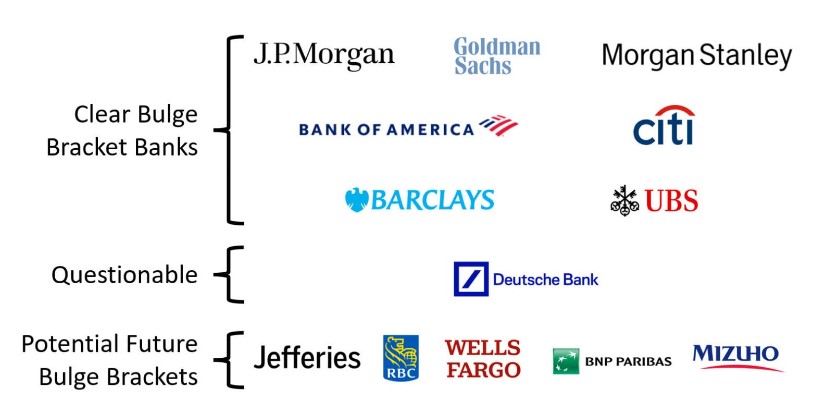
The following are clearly BBs: JP Morgan, Goldman Sachs, Morgan Stanley, Bank of America, Citigroup (USA), UBS (Switzerland), and Barclays (England). Potential BBs include: Jefferies and Wells Fargo (USA), BNP Paribas (France), Mizuho (Japan), and RBC (Canada), while Deutsche Bank (Germany) is in a “questionable” position .
It is precisely these operations by global corporations that inflate speculative bubbles, such as real estate bubbles, which have doubled twelvefold and spread to 11 countries, now affecting some of the world’s most important cities, including London, Geneva, Paris, Zurich, Tokyo, Vancouver, and San Francisco. Speculative maneuvers within the real estate industry have driven up housing prices and generated the world’s most significant housing crisis, affecting millions of families with foreclosures, evictions, and displacements at levels not seen since the 2009 financial crisis.
One of the oldest speculative maneuvers in capitalism is the share buyback, a tactic that involves artificially inflating a company’s share price regardless of its economic performance. The company itself buys back its shares, thus increasing their value and making the company worth more, even if its operations are disastrous. After 10 years of bailouts, multinational corporations used the injected funds to carry out massive share buybacks, further exacerbating the problem of corporate size and the artificial growth of stock markets. This increase has nothing to do with the performance of the economy, which is stagnant and teetering on the brink of recession.
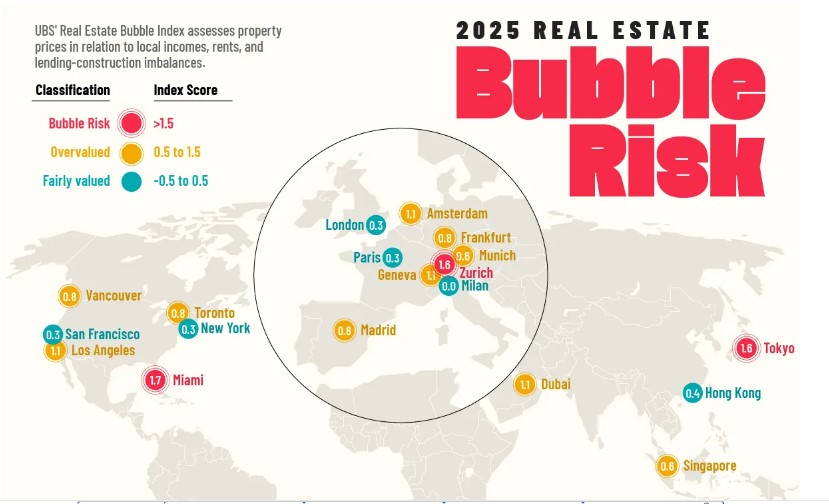
The image shows speculative bubbles in 2025. Those at risk of bursting are in red, while those that are overvalued are in yellow.
If the “too big to fail” companies are now even bigger, it’s because they received monstrous injections of capital over 18 years, which the executives in charge of these companies used to speculate and expand their fortunes. Multinational corporations are run by professional swindlers, white-collar criminals, who are permanently outside the law. The wealth and overaccumulated capital of these large companies that dominate the world economy is inversely proportional to the hunger, poverty, and misery suffered by billions of people worldwide.
These corporations, whose size is monstrous and ever-growing, plunder, pressure, liquidate, and expropriate the global economy, its various sectors and social classes, including capitalist sectors, the middle class, nations, companies, branches of production, commerce, industry, states, provinces, regions, zones, and cities. From the speculative development carried out by these corporations, not only have old speculative maneuvers like share buybacks been revived, but new and highly dangerous speculative products and maneuvers have also emerged. In the 2007-08 crisis, the new speculative products that arose at that time, such as mortgage-backed securities (MBS), collateralized debt obligations (CDOs), and credit default swaps (CDS), played a major role.
These products are incredibly complex because they offer a single package of numerous speculative securities of varying value and quality. For example, CDOs are products comprised of thousands of individual mortgages bundled together to form a mortgage-backed security with different tranches. For instance, lower tranches are filled with high-risk mortgages that could default, while higher tranches are considered safer. They are given sophisticated, strange, and obscure names like Abacus 2005-3, Class V Financing, and Jupiter High Grade. JP Morgan issued US$128 billion of these, and Citigroup issued US$110 billion, giving them the opportunity to remove debt from their books and improve their financial image. These securities were purchased by governments, insurance companies, pension funds, farmers’ unions, university endowments, large banks, and others who, deceived by capitalists, fill their coffers with these time bombs that could explode at any moment.
And increasingly complex speculative products are emerging, such as the square CDO, which is composed of the lower tranches of hundreds of other CDOs, or the synthetic CDO, which includes a package of CDSs. Even riskier financial instruments have emerged, posing a growing threat, such as Exchange-Traded Funds (ETFs), which are larger funds. They don’t bet on the price of a commodity or asset, but rather on the price of an index—for example, a commodity index, a stock market index, a volatility index, a technology stock index, and so on—any index.
ETFs are larger than synthetic CDOs and package much more. For example, if someone wants to bet on the oil price index, they buy the ProShares UltraShort Bloomberg ETF (SCO). If they want to bet on the price of a cybersecurity company index, they buy the PureFunds Cybersecurity ETF (HACK), and so on. The development of ETFs has raised all sorts of warnings from analysts and journalists, who denounce them as “weapons of mass destruction” that have distorted stock prices. Outside of ETFs, this whole range of financial products, such as stocks, bonds, commodities, currencies, etc., are called ” derivatives” because they are contracts whose value is derived from an underlying asset.
Global corporations are riddled with derivatives contracts. For example, Deutsche Bank’s current exposure to the derivatives market totals €54.7 trillion, five times the GDP of the entire European Union and 20 times the GDP of Germany. This enormous mass of fictitious capital, if defaulted, could unleash an unstoppable chain reaction of bankruptcies and devastate entire sectors of the global economy. This dangerous exposure of Deutsche Bank is just one example of the very serious dangers these entities pose to the global economy, a situation repeated with other multinational corporations such as JP Morgan, Goldman Sachs, Bank of America, Citigroup, and so on. This is why the authorities of capitalism cannot allow the bankruptcy of a corporation, a country, or practically any economic agent, and they bail out everything they can.
Derivatives are instruments not used to create jobs or stimulate the economy, but rather by managers and executives of multinational corporations to distribute dividends, pay bonuses, and high salaries. The financial bailouts and rescues that began with QE5 demonstrate what Karl Marx stated in Capital: “In times of crisis, the appetite for money intensifies. ” In other words, the crises of global corporations act like a bottomless pit whose demands require more and more money to keep the system alive. For this reason, global corporations are perpetual creators of more disasters and even greater crises looming in the coming period.
4) The crisis in Japan
A silent earthquake began to ravage the global capitalist-imperialist economy on November 10, 2025, when the Bank of Japan raised the Japanese bond yield by 1.75%. This began to affect global pension funds, cryptocurrencies, mortgages worldwide, and more, due to the collapse of the Japanese carry trade. We will explain the collapse of this speculative maneuver, which capitalists around the world had employed for over 36 years and which became a fundamental tool of capitalism, now in crisis.
Japan has been facing a long-standing crisis for 36 years, ever since the Tokyo real estate bubble burst in 1990. From then on, Japan’s economy languished, with zero growth, zero interest rates, and zero inflation, showing barely any signs of life. Consequently, Japanese imperialist companies and their large financial corporations focused on exporting capital out of Japan using a maneuver called “carry trade.” This involved borrowing yen with zero interest rates and buying other assets with higher interest rates to generate substantial profits. Japanese capitalists and speculators invested trillions of dollars in foreign markets around the world.
When the widespread bankruptcy of global corporations erupted, Shinzo Abe’s government injected over $10 trillion in financial bailouts and rescue packages in 2013. With what became known as “Abenomics,” the masses of cheap Japanese capital multiplied and reached new and gigantic proportions. In doing so, Japan provided a massive, invisible flow of capital to the global capitalist economy by printing money at a 0% interest rate, which inflated stock markets, assets, pension funds, corporations, and all kinds of businesses.
https://data.worldbank.org/share/widget?indicators=NY.GDP.MKTP.KD.ZG&locations=JP
The image shows Japan’s economic collapse. From the “Japanese miracle” of the 1960s and 70s to zero growth following the bursting of the Tokyo real estate bubble in the 1990s. You can explore the interactive image to access the data.
But the outbreak of global inflation spoiled Japan’s seemingly endless party, hitting the country hard and triggering its first inflation surge in 36 years. This forced the Bank of Japan (BoJ) to raise interest rates on November 10, 2025, to combat inflation. However, by raising interest rates, the BoJ effectively halted the carry trade, effectively stopping the machine that handed out easy money to capitalists and speculators worldwide.
Capitalists continue to warn of the danger of the end of one of the largest printers of cheap money, which has ceased to create money. “There is a risk in Japan… The carry trade is disappearing, and people aren’t measuring the domino effect that Japan can cause , “ noted Bertrand de Montauzon, CEO of Brightgate Capital.A 1.75% increase in Japanese interest rates may sound minimal, but it is enough to trigger a global earthquake because masses of Japanese capital began leaving the rest of the world and returning to Japan, which could push thousands of companies worldwide into bankruptcy.
The capital that Japan used for decades to finance the world’s capitalist enterprises with an invisible but constant flow, practically giving away money for free, is now losing money if it remains abroad and returns to speculate within its own country. This shift in capital behavior will expose the global corporations that accumulate enormous amounts of bad debt, and they will no longer have the backing of massive amounts of Japanese capital to cover it. According to data from the Ministry of Finance, Japan’s foreign investments amounted to 666.86 trillion yen, the equivalent of 4.54 trillion dollars, which are now vanishing—something the governments of the world’s imperialist countries cannot prevent, thus setting the stage for a global tsunami of bankruptcies.
5) The China crisis
The world’s largest factory is in complete crisis: its growth has plummeted from 14% to 5%, which is considered a recession. It has developed a real estate bubble estimated at approximately $30 trillion, the bursting of which has the potential to destroy half the global economy, and which is now slowly imploding . And now, from a country where capital from all over the world used to flow in to invest, the “Great Withdrawal” has begun, with capital fleeing . Let’s analyze the crisis in China, which is also exacerbating the global crisis of capitalism.
First and foremost, it’s important to clarify a point stemming from the fact that a sector of bourgeois public opinion constantly raises the “specter” of China as a rival to the US, and there is confusion within a sector of activism due to the actions of charlatan leaders of global leftist groups who label China an “imperialist” country . The reality is that the millions of products arriving worldwide bearing the “made in China” label , and the companies and banks that appear under the Chinese flag, are not Chinese themselves, but rather the expression of imperialist capital presented under a Chinese name. All major Chinese companies operate on Wall Street, in London, and in Hong Kong under imperialist supervision and have received millions of dollars in massive investments from American, European, and Japanese imperialist capital for decades. Therefore, the entire movement of companies and capital with Chinese names is nothing more than the expression of the activity of Chinese bourgeoisie associated with imperialist capital.
China has multinational corporations and large companies, but it doesn’t possess global corporations or bulge brackets, which is why it lacks the capacity to control or contest the destiny of the world economy. The charlatans who speak of a Chinese “empire” are impressed by Chinese brands and companies, but they haven’t seriously studied the origins of the capital that sustains them. The reality we see every day is that, far from witnessing a “third world war” between China and the US, the Chinese government, beyond occasional, understandable friction, is completely subordinate to the imperialist order and accepts its role in the international division of labor imposed by imperialism.
Having clarified that point, China is sub-metropolis born from the crisis in Japan, which, when it collapsed in the 1990s, forced imperialism to seek another pillar of support. It found in China a higher rate of exploitation, impossible to achieve in Japan, Europe, or the US. This high rate of exploitation was achieved against a young, defenseless migrant proletariat from the countryside, lacking tradition and knowledge of their rights, and brutally repressed by the capitalist dictatorship of the Communist Party of China (CPC). The imposition of terrible levels of exploitation and precarious work on millions of people allowed for the “glorious 15 years” of constant growth and expansion of China’s capitalist economy between 1992 and 2007, generating enormous profits for global corporations and the CPC’s ruling oligarchy.
But China’s “party” ended when the global capitalist crisis hit China hard in 2008/09, and Xi Jinping’s government was forced to respond with financial bailouts to rescue bankers and corporations operating in the country. With these bailouts, the CCP government channeled massive amounts of money to provincial and city governments to launch housing loan programs initially intended for the bourgeoisie and the upper petty bourgeoisie. But the business grew exponentially, generating such substantial profits that the loans began to extend to sectors of the working class and the general population.
Soon, these working-class sectors were unable to repay their mortgages, rendering these immense amounts of loans “uncollectible” and transforming into a gigantic speculative bubble on the verge of bursting. The “Chinese bubble” was concentrated in the crisis of real estate giants such as Evergrande Group, Fantasia Holdings Group Co., Central China Real Estate Ltd., and Guangzhou R&F Properties, among others. The CCP oligarchy could not halt the wave of construction contracts for fear of bankrupting the entire economy, so they continued building houses and apartment buildings, even though no one could live in them. Thus, the Chinese real estate bubble had striking manifestations such as the existence of “ghost cities” in Ordos, Inner Mongolia; Tianducheng, famous for being a replica of Paris; and Shenyang, a complex of European-style luxury mansions, to name a few. Enormous complexes and cities where no one lives.
Faced with the worsening crisis and the risk of the real estate bubble bursting, the imperialism already experienced in bubbles like the Tokyo real estate bubble, the US subprime mortgage bubble, and those in Ireland and Spain, intervened in China to prevent it from becoming another Japan. US imperialism came to China’s aid by establishing an agreement on August 26, 2022, between the Public Enterprise Accounting Oversight Board (PCAOB), a corporation under the control of the US Congress, the China Securities Regulatory Commission (CSRC), and the Ministry of Finance of the People’s Republic of China. The agreement stipulated that the US regulates, inspects, and controls Chinese companies operating on Wall Street, which are the most important in China because they receive the largest flow of investment, as you can read by clicking here.
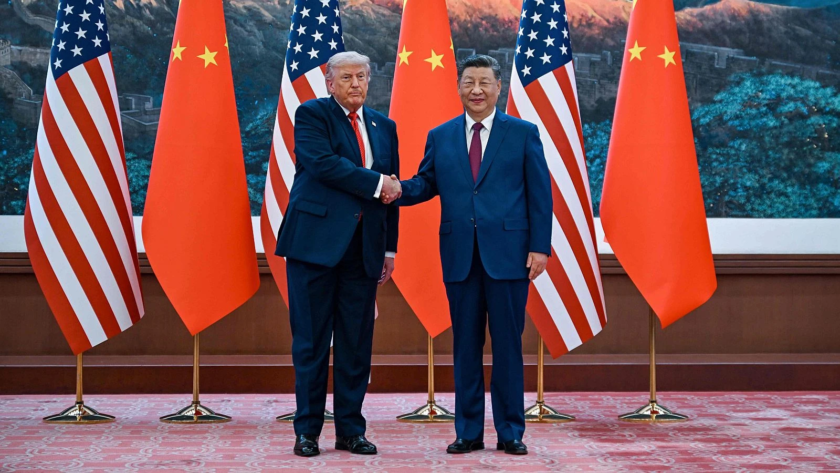
US officials and accountants from the PCAOB began auditing, supervising, and controlling the accounting records of all major Chinese capitalist companies, under the laws of the US imperialist state—a practice that continues to this day and has allowed US inspectors to complete their reviews in mainland China and Hong Kong without difficulty . Simultaneously, US-China summits began to be held regularly, and during Janet Yellen’s visit to Beijing from July 6-9, 2023, agreements were reached to help the bubble burst “softly.” Through this collaboration with the US, China was able to proceed with declaring Evergrande and some other corporations bankrupt, attempting to prop up China as its economy headed toward recession.
It was this entire process of the “implosion” of the Chinese bubble, comprised of bankruptcies, layoffs, and the destruction of parts of its production sectors, that caused the economy to fall into recession. China left behind the 10% to 12% GDP growth, with peaks of 14% during the “15 glorious years,” only to now plummet to 5% growth, which is considered a recession—a true collapse that reached negative peaks of -6%. Thus, what was once the “engine” of growth for the global capitalist economy has disappeared; it no longer exists. Now, China has become a lead weight on the world economy, which is why the capital that once flowed into China is now beginning to withdraw.
Foreign direct investment (FDI) in China, which during the “glorious 15 years” had reached flows of over $200 billion, has now plummeted to $200 billion by 2025—a negative figure, meaning a massive outflow of capital from China. This drastic decline represents the lowest point for investment in 30 years. But the fall in FDI in China is not solely a product of the bursting of the real estate bubble and the overall strategy of imperialism.
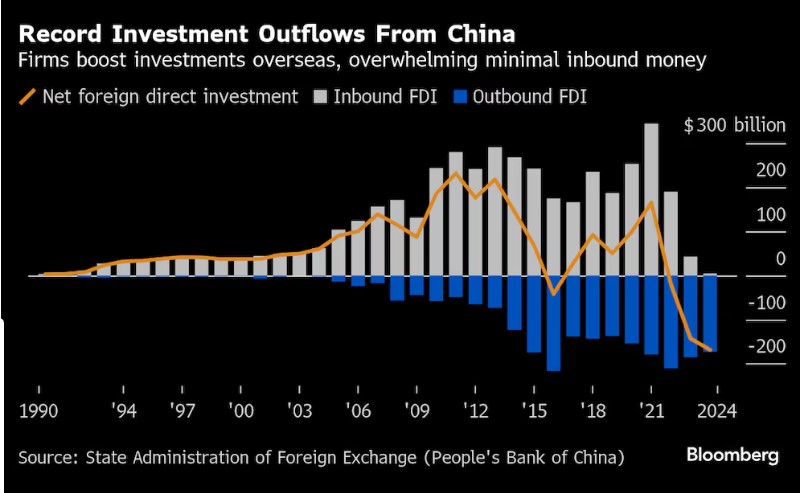
The image shows the dramatic decline in foreign direct investment in China since the 1990s. It reached $200 billion in 2009 and plummeted to a negative $200 billion between 2024 and 2025. Source: Bloomberg/ State Administration of Foreign Exchange of the People’s Bank of China
The decline in foreign direct investment (FDI) and the process of the “Great Withdrawal” are also a product of the falling rate of profit in China, a result of the resistance that the workers and people of China have been waging against the CCP dictatorship. For more than 10 years now, the Chinese working class and the indigenous peoples that make up the multiethnic Chinese state—in reality, a prison of peoples—have been engaged in a struggle against the capitalist dictatorship of the CCP.
The struggle of the Uyghur people residing in the Xinjiang Uyghur Autonomous Region in 2014, the Hong Kong revolutions of 2014 and 2019, the wave of workers’ strikes in Guangdong between 2011 and 2014, and the wave of strikes and protests that erupted across China following the Foxconn strike in November 2012, as well as the “White Papers” mobilizations in 2012, were the most visible expressions of a changing political situation in the country. And now the people were beginning to confront the dictatorship. In May 2015, a wave of strikes erupted among workers at Yunda Express in Chengdu, Ligao Lighting Co. in Dongguan, POSCO Stainless Steel Co. in Zhangjiagang, and others, to name a few.
The implosion of the housing bubble has influenced the growth of workers’ struggles and protests, as seen with over 100 homeowners in the stalled Heda Xingfu housing project in Qingdao, Shandong Province, who blocked National Highway 204. Similarly, in Xianyang, Shaanxi Province, and the coastal city of Dalian, Liaoning Province, hundreds of homeowners organized demonstrations against the forced demolition of their properties, to name just a few examples. It is this growing resistance of the Chinese people and workers that prevents employers from achieving the same levels of exploitation they enjoyed before such struggles existed.
This situation is leading many multinational corporations to shift their investments to countries like Vietnam, India, and Indonesia, which, in some sectors, have similar levels of exploitation to China. If foreign companies continue to withdraw or reduce their operations in China, the country’s economic growth could be affected in the medium and long term. The uncertainty caused by the economic slowdown, with its sluggish growth and declining domestic demand, is causing imperialist capital to lose confidence and reconsider its investments in China. To try to reverse this situation, Xi Jinping’s capitalist dictatorship has launched a new round of bailouts and rescues by the end of 2025, seeking to revive the economy by establishing programs like “Cash for Junk,” which aims to provide subsidies for citizens to trade in their old appliances, phones, and vehicles for newer models.
For this program, the CCP dictatorship doubled the budget to 300 billion yuan, approximately $42 billion, financed through the issuance of ultra-long-term treasury bonds. Furthermore, the dictatorship raised the budget deficit target to 4% of GDP, up from the traditional 3%, allowing the government to inject more money into the economy through special bonds for local governments earmarked for social protection, offering child allowances, implementing direct aid for families with more than one child, and providing subsidies for childcare and early childhood education.
Furthermore, tax cuts for childcare and eldercare expenses are another set of measures to alleviate the situation of families suffering from poverty. On the other hand, the People’s Bank of China (PBOC), the central bank, moved forward with reductions in bank reserve requirements to release approximately 1 trillion yuan to facilitate consumer loans and loans to small businesses. Thus, the Xi Jinping government, operating from Zhongnanhai (the Chinese government headquarters), put millions into the pockets of the people so they could buy goods and prevent the economic collapse, in line with Donald Trump’s implementation of QE5. But no matter how many measures the CCP dictatorship launches to reduce social discontent, the profound changes brought about by the crisis in capitalist China will not prevent the outbreak of revolution.
6) The cryptocurrency crisis
Another factor exacerbating the crisis of capitalism is the cryptocurrency crisis. For the past six months, cryptocurrencies have been plummeting, with the total market capitalization falling from nearly $3 trillion to $2.71 trillion—a drop that has resulted in enormous losses. Cryptocurrencies are highly dangerous speculative instruments that have led to numerous scams, such as the one in which Argentine President Milei publicly defrauded hundreds of savers with cryptocurrencies, among many other public scams perpetrated using these financial instruments.
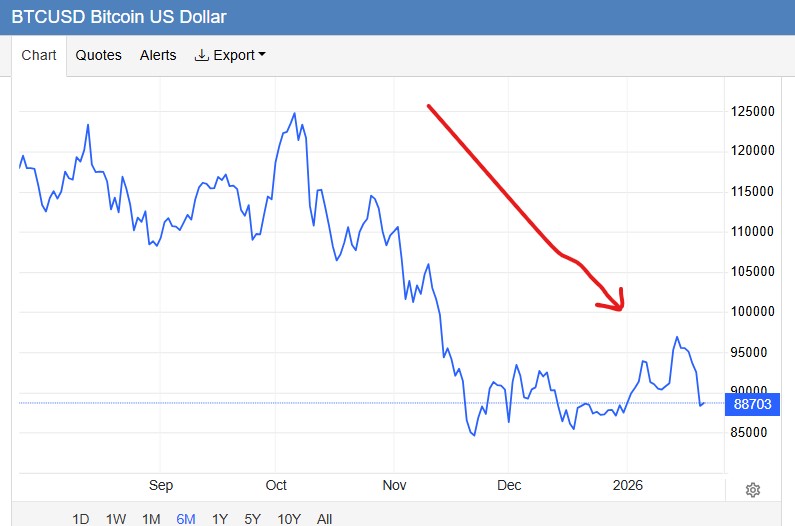
The image shows the collapse of Bitcoin over the last 6 months, from September 2025 to January 2026.
Since the global corporate bankruptcy of 2008/09, a host of pundits and charlatans have claimed that cryptocurrencies, and especially their star, Bitcoin, are the solution to all of capitalism’s problems. They said that cryptocurrencies are an alternative to the dollar, that any country that adopts them will emerge from the crisis, that cryptocurrencies could build a more democratic “new capitalism ,” and a whole string of other nonsense spouted by many of their most ardent defenders who call themselves “anarcho-capitalists.”
These same charlatans claimed that the dollar’s fall was a product of “the end of US hegemony.” They said that “the rise of China or Russia as alternative powers would bring a new order with the yuan, the renminbi, or the ruble as currencies.” And that Bitcoin would be “the ultimate alternative in this new order .” All false. The reality is that the dollar’s collapse is dragging down all currencies, all financial instruments, speculative securities, and now, cryptocurrencies are also being dragged down with it. And this has nothing to do with a question of “hegemony,” as the ignorant keep repeating, but rather with something very simple: To the extent that financial bailouts and rescues create gigantic masses of fictitious capital, all existing capital masses are devalued.
This devaluation is a product of the Law of Value: the only thing that produces value is human labor. Capital, and any form of money such as financial instruments, have no inherent value; to acquire value, they must exploit human labor. In parallel with the collapse of cryptocurrencies, the prices of precious metals, gold and silver, rise, which is also an expression of the Law of Value.
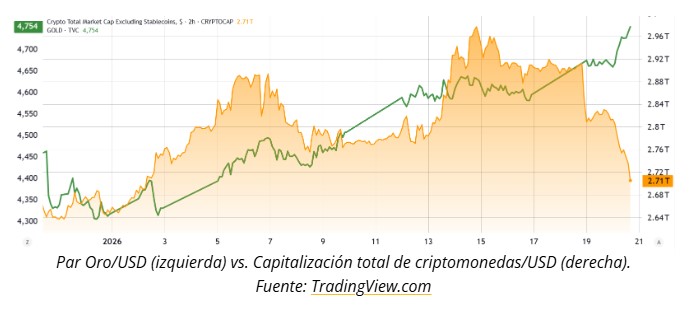
The image shows how in the first days of 2026, while cryptocurrency prices collapse (in yellow), gold prices rise (in green).
Gold and silver keep rising in value because they are commodities that embody human labor; that’s why they have historically served as a reserve in central banks and as backing for all the world’s currencies. The leaders of capitalism, when implementing financial bailouts and rescues, act like sorcerers, believing they can violate the laws of science, or ignoring them altogether. These desperate capitalist leaders create gigantic masses of fictitious capital and violate the Law of Value, believing that nothing will happen to them and that there will be no major consequences. But the Law of Value, like the Law of Gravity, cannot be violated without consequences: No one who jumps from the 100th floor of an apartment building comes out unscathed.
The collapse of capital, the devaluation suffered by all capital worldwide simultaneously, is the inevitable result of the deepest laws of economics. All the charlatans who predicted a world of “bitcoins” are receiving a furious slap in the face from reality upon witnessing the current collapse of cryptocurrencies.
Furthermore, the ” cryptocurrency crisis ” has reached a critical point in 2026 as regulatory bodies of capitalism demand their entry into the speculative cryptocurrency market, where all kinds of illicit operations take place, including money laundering, organized crime funds, drug trafficking, human trafficking, and so on. We can call this period the end of the “Wild West” due to the regulatory pressure of laws like MiCA in Europe and new legislation in the US that have forced crypto companies to operate like traditional banks.
Forced to “launder” their operations, many platforms that couldn’t meet capital or transparency requirements have gone bankrupt or disappeared in recent months. This “laundering” process eliminates the anonymity and lack of controls that characterized the sector, which had previously granted impunity to the flow of funds. But another phenomenon is impacting the cryptocurrency crisis: it’s no longer a market for ” small investors ,” as the “anarchists” who believed they could become millionaires overnight by trading from a computer in their garage once envisioned.
Now, large investment funds and global corporations are beginning to take over the sector with instruments like ETFs, which are absorbing the entire business and acquiring major cryptocurrencies like Bitcoin, as well as “altcoins,” the alternative currencies that have now entered a “survival crisis.” This is how another of the great laws of Marxist economics is being fulfilled to the letter, sweeping away the “anarchist dream” of those who fancied a “democratic Bitcoin capitalism.” The law of the tendency toward centralization and concentration of capital, which Marx explained in Volume 1 of Capital, is being fulfilled—a trend that is beginning to develop in the speculative cryptocurrency business, which is evolving from a group of individual speculators to a concentrated business of large corporations.
The impact of the global class struggle on the economic crisis
The QE5 program faces this panorama of six combined crises that it can hardly resolve. Rather, it will act like a medicine that barely alleviates the pain, while the body of capitalism gradually decomposes and implodes. We have presented the different crises separately in summary form, but we have pointed out that this is not how they function in reality, where they operate by reinforcing each other. But we also want to emphasize, as we did at the beginning of the article, that nothing that happens in the crisis of capitalism is unrelated to what happens in the class struggle.
The crisis of capitalism is, first and foremost, the product of a revolutionary mass upsurge, a series of revolutionary waves unlike any seen in human history. This global revolutionary process is unfolding across five continents with three revolutionary waves, the third of which we are currently experiencing. These waves include mobilizations sweeping through Iran, Turkey, the “No Kings” movement in the US , the movement against ICE, Serbia, Bangladesh, Nepal, Morocco, Peru, Paraguay, Ecuador, France, the Ukrainian national revolutionary war, Syria, Rojava, the Palestinian national liberation Intifada, and more. This wave is striking both dictatorships and bourgeois democratic regimes in crisis, mercilessly shaken by a colossal revolutionary upsurge.
Financial bailouts and rescues are the defensive response of global imperialism to the global revolutionary upsurge. While propping up a dying capitalist system, they attempt to halt the revolution sweeping across five continents with unemployment benefits, food stamps for the hungry, and welfare assistance for young people. They want to divert the mobilizations with deception, but the people of the world have risen up to fight for their future, disregarding the pronouncements of governments, regimes, and capitalist institutions, and indeed, fighting against them all. One striking fact that profoundly reveals the impact of the class struggle on the crisis of capitalism is precisely the rise in precious metal prices.
Precious metals are a commodity that acts as a safe haven for capital. When capitalists are terrified of revolutions, they flee in panic to “safe investments” such as gold, silver, and other precious metals, which will never result in a loss because they do not depreciate. They also take refuge in the dollar, not because of the strength of the US economy, but because of the military might of the Pentagon and its seven fleets, which act as the ultimate military insurance for global capitalism. The striking fact is the rise in the price of precious metals, which is climbing to infinity around 2024 and 2025.
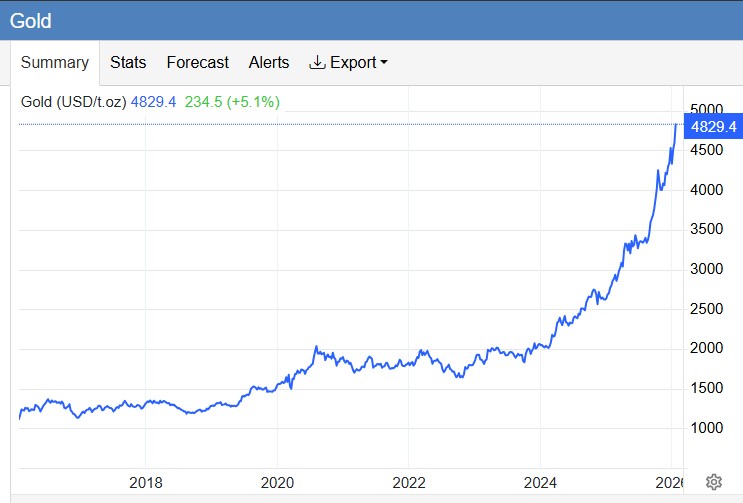
The image shows the dramatic rise in the price of gold. It remained relatively stable until 2024, after which it began its unstoppable climb in 2024 and 2025. Source: Trading Economics
The years 2024-25 are the years in which major revolutionary processes like the Third Intifada, in addition to questioning the pillars of capitalism, begin to express a clear advance in the consciousness of the world’s peoples, manifested in slogans like “Free Palestine from the River to the Sea,” “Death to the IDF,” and begin to show the development of new political phenomena such as the emergence of Generation Z, or the resurgence of the Black Panthers in the USA, a symbol of the process of self-organization and self-defense that is sweeping the world, giving rise to a new generation of activists who are the embryo of a new trade union and political leadership of the working class and the people.
Thus, this period of the 21st century reveals the combination of the February Revolutions, social revolutions against capitalism, with the political revolution, the process of the collapse of all the organizations and parties that led the mass movements in the 20th century. The crisis of social democracy, Stalinism, bourgeois nationalist movements, former guerrillas, and all reformist movements is the result of their losing their foundation as capitalism collapses. A capitalism without a boom and without reforms leaves reformism without a base of support.
As the global revolutionary process intensifies, capital flees to the safe haven of gold, abandoning investments, withdrawing from risky financial instruments, cryptocurrencies, China, and anything that smacks of danger or instability. This massive flight of capital from risky investments transforms everything that isn’t a safe haven into speculative bubbles. This is why bubbles are accumulating across the globe, as evidenced by the recent data revealing a speculative bubble surrounding the artificial intelligence (AI) boom .
While Trump rehearses new antics to distract the unwary by talking about an “invasion of Greenland,” we Marxists will take advantage of the revolutionary processes that will intensify amidst the inevitable failure of QE5 to continue rallying cadres, leaders, and militants around Marxism. There is no reformist solution to the crisis, and that is why reformism is dying worldwide. The only way out is revolutionary: the abolition of the capitalist system and its bankrupt global corporations that are collapsing on top of us all, a fall whose collapse the ruling classes, in their desperation, are only accelerating. With this analysis we are presenting, we Marxists are preparing to influence and guide the activism that will inevitably lead the revolutionary processes, so that together with the mobilized millions, we can put an end to capitalism once and for all and establish global socialism.